Living with Abuse
12/01/10 17:15 Filed in: Current
Events
With the publication of
the Murphy Report at the end of 2009 the ugly subject
of abuse was once again in the spotlight. But clerical
abuse is only the tip of the iceberg. 29% of abuse
victims are abused by close family, and 60% are abused
by someone close to the family. The problem is far
wider than often we want to recognise. And more people
are wrestling with the trauma of abuse.
An article this length is too short to give detailed help on living with abuse, but let me say 3 things:
Justice: Something deep within us yearns for justice. We can’t simply let the past be past, and move on. Or forgive and forget, as some would put it. But confrontation is rarely satisfying; following the legal channels rarely provides long-term satisfaction. So where do we turn to, particularly if forgiveness hasn’t been sought, or the hope of earthly justice is gone?
What if you could have confidence that one day justice would be done? That is the assurance God gives. God is a God of justice who will open up the great records of our deeds, who will leave no evil unpunished. He is a God who will demand the full price for every wrong act. Though it is delayed, it will come. Trusting this enables you to deal with the resentment, and to know that you can leave it in God’s hands. He will deal with it.
Meaning: Memories linger and resurface unbidden. Part of the reason is that the mind is searching for meaning and purpose in the pain. Talking to someone is good because it helps allay fears, and it can put to rest troublesome questions. Discipline is also required to keep our minds from jumping back constantly into the same old tracks. But yet, where do we find meaning in it? Can we find a good purpose amidst the pain? As a pastor, the only place I can point to is to God’s word where we see that God has the power, and the willingness to bring good out of the bleakest of situations. We need to keep taking our minds there.
Cleansing and Acceptance: When we have been sinned against it leaves a stain on our lives, something that often makes us feel dirty and second rate. Not only that, but at the heart of much abuse lies the issue of insecurity, the desire to be wanted and loved—and after abuse, the feeling of “Who would want anything to do with me?”. The insistent and wonderful answer of the Bible is that almighty God offers to cleanse us not only from sins that we have committed, but from those committed against us. And he wants us, and will accept us and love us, not as second-class citizens, but as his own precious and beloved children.
Much, much more could be said, but these are pointers to where I believe the deepest and most lasting help can be found.
An article this length is too short to give detailed help on living with abuse, but let me say 3 things:
Justice: Something deep within us yearns for justice. We can’t simply let the past be past, and move on. Or forgive and forget, as some would put it. But confrontation is rarely satisfying; following the legal channels rarely provides long-term satisfaction. So where do we turn to, particularly if forgiveness hasn’t been sought, or the hope of earthly justice is gone?
What if you could have confidence that one day justice would be done? That is the assurance God gives. God is a God of justice who will open up the great records of our deeds, who will leave no evil unpunished. He is a God who will demand the full price for every wrong act. Though it is delayed, it will come. Trusting this enables you to deal with the resentment, and to know that you can leave it in God’s hands. He will deal with it.
Meaning: Memories linger and resurface unbidden. Part of the reason is that the mind is searching for meaning and purpose in the pain. Talking to someone is good because it helps allay fears, and it can put to rest troublesome questions. Discipline is also required to keep our minds from jumping back constantly into the same old tracks. But yet, where do we find meaning in it? Can we find a good purpose amidst the pain? As a pastor, the only place I can point to is to God’s word where we see that God has the power, and the willingness to bring good out of the bleakest of situations. We need to keep taking our minds there.
Cleansing and Acceptance: When we have been sinned against it leaves a stain on our lives, something that often makes us feel dirty and second rate. Not only that, but at the heart of much abuse lies the issue of insecurity, the desire to be wanted and loved—and after abuse, the feeling of “Who would want anything to do with me?”. The insistent and wonderful answer of the Bible is that almighty God offers to cleanse us not only from sins that we have committed, but from those committed against us. And he wants us, and will accept us and love us, not as second-class citizens, but as his own precious and beloved children.
Much, much more could be said, but these are pointers to where I believe the deepest and most lasting help can be found.
Abuse - A future for Faith?
15/12/09 17:15 Filed in: Current
Events
The publication of the
Murphy Report on the awful abuse perpetrated and
subsequently covered up was the third in a line of long
reports that have rocked our nation. What are we to
make of these?
First of all, we have to say that there is no place for such abuse, and no place for covering it up in any part of society. We’ll look at help for the hurting next week, but prior to that we need to look at the implications for faith. One reaction would be to have nothing more to do with religion in general and Christianity in particular. Yet that reaction, understandable though it is, would be hasty.
As a contributor to RTE’s Frontline programme commented perceptively, “Ireland has got so caught up in religion that it has forgotten its Christianity”. That says a lot in a few words.
Part of the problem perhaps has been the confusion between what is called Christianity and genuine Christianity. Much of what passes as Christianity is merely religion in a Christian dress. Religion is based on us doing our best to please God through a variety of rituals. The essence of genuine Christianity that we are saved, not because of what we do, but solely because of what Christ has done for us. Belief in this is profoundly humbling.
Belief in the other leads to all sorts of problems: it creates an aura of fear, where the secrets of salvation are held by an elite few, where they become powerful, and blessing is at their say so. That amount of power is then open to abuse. It has been thus since the temples of ancient Greece, Rome, and the Incas.
The Bible is unequivocally condemning in its critique of such religiosity. Just as it is condemning of those who use their religion to hurt and abuse others. Jesus warns those who cause little ones to stumble with regard to God that it would be better for them to be taken out and drowned. He castigates those who use their power to whitewash over all manner of evil within:
“Woe to you, teachers of the law and Pharisees, you hypocrites! You clean the outside of the cup and dish, but inside they are full of greed and self-indulgence… You are like whitewashed tombs… How will you escape being condemned to hell?” (Matthew 23).
Part of the solution, therefore lies not in the abandonment of religion, but in the embrace of genuine Christianity. When Martin Luther King Jr. confronted the racism endemic in the church-dominated white Southern states, he did not call it to abandon its Christian principles. Instead he called them to be more Christian, rather than less Christian, to be more true to what the Bible says.
We are chronically unaware of what the Bible really teaches, and so, in part, what we need to do is to return to real biblical Christianity. There we will find safeguards; but also Jesus Christ, who brings ultimate hope, justice and cleansing.
First of all, we have to say that there is no place for such abuse, and no place for covering it up in any part of society. We’ll look at help for the hurting next week, but prior to that we need to look at the implications for faith. One reaction would be to have nothing more to do with religion in general and Christianity in particular. Yet that reaction, understandable though it is, would be hasty.
As a contributor to RTE’s Frontline programme commented perceptively, “Ireland has got so caught up in religion that it has forgotten its Christianity”. That says a lot in a few words.
Part of the problem perhaps has been the confusion between what is called Christianity and genuine Christianity. Much of what passes as Christianity is merely religion in a Christian dress. Religion is based on us doing our best to please God through a variety of rituals. The essence of genuine Christianity that we are saved, not because of what we do, but solely because of what Christ has done for us. Belief in this is profoundly humbling.
Belief in the other leads to all sorts of problems: it creates an aura of fear, where the secrets of salvation are held by an elite few, where they become powerful, and blessing is at their say so. That amount of power is then open to abuse. It has been thus since the temples of ancient Greece, Rome, and the Incas.
The Bible is unequivocally condemning in its critique of such religiosity. Just as it is condemning of those who use their religion to hurt and abuse others. Jesus warns those who cause little ones to stumble with regard to God that it would be better for them to be taken out and drowned. He castigates those who use their power to whitewash over all manner of evil within:
“Woe to you, teachers of the law and Pharisees, you hypocrites! You clean the outside of the cup and dish, but inside they are full of greed and self-indulgence… You are like whitewashed tombs… How will you escape being condemned to hell?” (Matthew 23).
Part of the solution, therefore lies not in the abandonment of religion, but in the embrace of genuine Christianity. When Martin Luther King Jr. confronted the racism endemic in the church-dominated white Southern states, he did not call it to abandon its Christian principles. Instead he called them to be more Christian, rather than less Christian, to be more true to what the Bible says.
We are chronically unaware of what the Bible really teaches, and so, in part, what we need to do is to return to real biblical Christianity. There we will find safeguards; but also Jesus Christ, who brings ultimate hope, justice and cleansing.
Dreaming of a dry Christmas
08/12/09 17:15 Filed in: Musings
Dreaming of a Dry
Christmas
(by Jonny McCollum, working with Milford church)
It looks like Ireland is about to have a white Christmas. How do I know? Because according to one ‘expert’, the last two were in 1999 & 2004 – five years apart. Which means that we’re due to have snow in 2009! Maybe someone should tell this ‘expert’ that weather doesn’t necessarily work like that.
Wouldn’t it be handy if the weather followed sequences like that? There would be no need for expensive meteorological equipment, because forecasting would be child’s play. Planning our lives would be much easier too and best of all, conditions would never take us by surprise.
If only we had known how wet November was going to be. We knew there would be rain (when isn’t there?), but few expected it to be the wettest November on record.
If we knew what was going to happen flood defences could have been improved and homes could have been protected. But sadly, we were taken by surprise. Rivers burst their banks and water gushed out of drains as streets were submerged and housing estates were cut off by torrents of water.
The effects of the floods were devastating. Thousands of people watched in horror as the floodwaters crept towards their homes and eventually forced their way inside. Many experienced the heartbreak of seeing their possessions ruined—furniture sodden beyond repair, carpets defiled by the foul water, electrical equipment destroyed.
Businesses were devastated too as shops, restaurants and hotels were gutted. In a matter of hours, massive investments and years of hard work were rendered meaningless. We ought to feel sympathy for those affected—for some, everything they’ve worked to achieve was wiped out as the waters made their presence felt.
We all ought to take heed; we don’t know what’s around the corner.
If we base our happiness or our sense of security on our possessions, our homes or our businesses we are heading for disaster. If they are destroyed, our lives come crashing down. In fact, Jesus Christ warns us about that very danger. There’s only one way to find lasting happiness and security and that’s by turning to Jesus. He won’t exempt us from the difficulties of this world, but he’ll give us the grace to cope and the promise of a world to come that’s free from hardship.
And unlike the weather, he won’t let us down.
(by Jonny McCollum, working with Milford church)
It looks like Ireland is about to have a white Christmas. How do I know? Because according to one ‘expert’, the last two were in 1999 & 2004 – five years apart. Which means that we’re due to have snow in 2009! Maybe someone should tell this ‘expert’ that weather doesn’t necessarily work like that.
Wouldn’t it be handy if the weather followed sequences like that? There would be no need for expensive meteorological equipment, because forecasting would be child’s play. Planning our lives would be much easier too and best of all, conditions would never take us by surprise.
If only we had known how wet November was going to be. We knew there would be rain (when isn’t there?), but few expected it to be the wettest November on record.
If we knew what was going to happen flood defences could have been improved and homes could have been protected. But sadly, we were taken by surprise. Rivers burst their banks and water gushed out of drains as streets were submerged and housing estates were cut off by torrents of water.
The effects of the floods were devastating. Thousands of people watched in horror as the floodwaters crept towards their homes and eventually forced their way inside. Many experienced the heartbreak of seeing their possessions ruined—furniture sodden beyond repair, carpets defiled by the foul water, electrical equipment destroyed.
Businesses were devastated too as shops, restaurants and hotels were gutted. In a matter of hours, massive investments and years of hard work were rendered meaningless. We ought to feel sympathy for those affected—for some, everything they’ve worked to achieve was wiped out as the waters made their presence felt.
We all ought to take heed; we don’t know what’s around the corner.
If we base our happiness or our sense of security on our possessions, our homes or our businesses we are heading for disaster. If they are destroyed, our lives come crashing down. In fact, Jesus Christ warns us about that very danger. There’s only one way to find lasting happiness and security and that’s by turning to Jesus. He won’t exempt us from the difficulties of this world, but he’ll give us the grace to cope and the promise of a world to come that’s free from hardship.
And unlike the weather, he won’t let us down.
December's Verse
01/12/09 17:15 Filed in: Bible
I want to introduce you
to a young girl, not that old, possibly about 14 or 15.
She doesn’t come from a well off family, but she’s
happy. The reason for her happiness is a young man.
He’s noble, upright, honourable—and they’re engaged.
But her life has been turned upside-down. She’s pregnant. It’s the 1st century, and a deeply religious culture. There’ll be the shame of being pregnant before marriage and then the scorn poured on her when she explains, “It isn’t Joseph’s, this child came from God.” You can almost hear the laughter, the name-calling, the pained look in Joseph’s eyes. In human practical terms, Mary’s life had taken a severe downwards plunge. She could be stoned to death for adultery. At the very least she would be a social outcast forever.
Yet what do we see from this young girl? She sings—not an anguished lament for a lost childhood, but a song of praise. Surprisingly her song is not about her problems—it’s all about God, full of love and praise to God. Instead of turmoil, we see a song that reveals the spiritual strength of this amazing young girl.
The opening lines from her song are December’s verse on the 2009 calendar. The opening lines are startling, “My soul glorifies the Lord and my spirit rejoices in God my Saviour.” (Luke 1:46)
Two things stand out here:
Firstly, although her life has been turned upside-down, Mary is thrilled. Why is that? She has grasped that the promised Rescuer, whose arrival has been waited on since the time of Adam & Eve, has come. At last he has arrived. The one to whom all the sacrifices, kings, prophets, rescuers—indeed the whole Old Testament—had pointed. The answer to the great problem of man’s guilt has arrived. Any wonder Mary is thrilled!
But the second thing we see is this: Mary, the one woman chosen out of millions, the extraordinary blessed one, acknowledges that she needs God to rescue her, to be her saviour. She knows that guilty people cannot stand in the presence of a holy God. But she also knows that there is hope, that God will rescue her and she has evidently asked him to do that for her—for she calls him “My Saviour”.
And if this wonderfully privileged girl needs a Saviour so do we. That’s what Christmas is about—the coming into the world of the Saviour—one who’ll rescue us if we ask him. Mary tells us that we all need a Saviour.
In Other News!
I want to give a mention to the Milford Inn’s Christmas Appeal this year. It’s about supplying presents to those children in our own community whose families are finding things tough. If you’re able to help out, drop in to the hotel and ask for Joanne. Well done to Joanne, Audrey and Caroline and all the staff at the hotel.
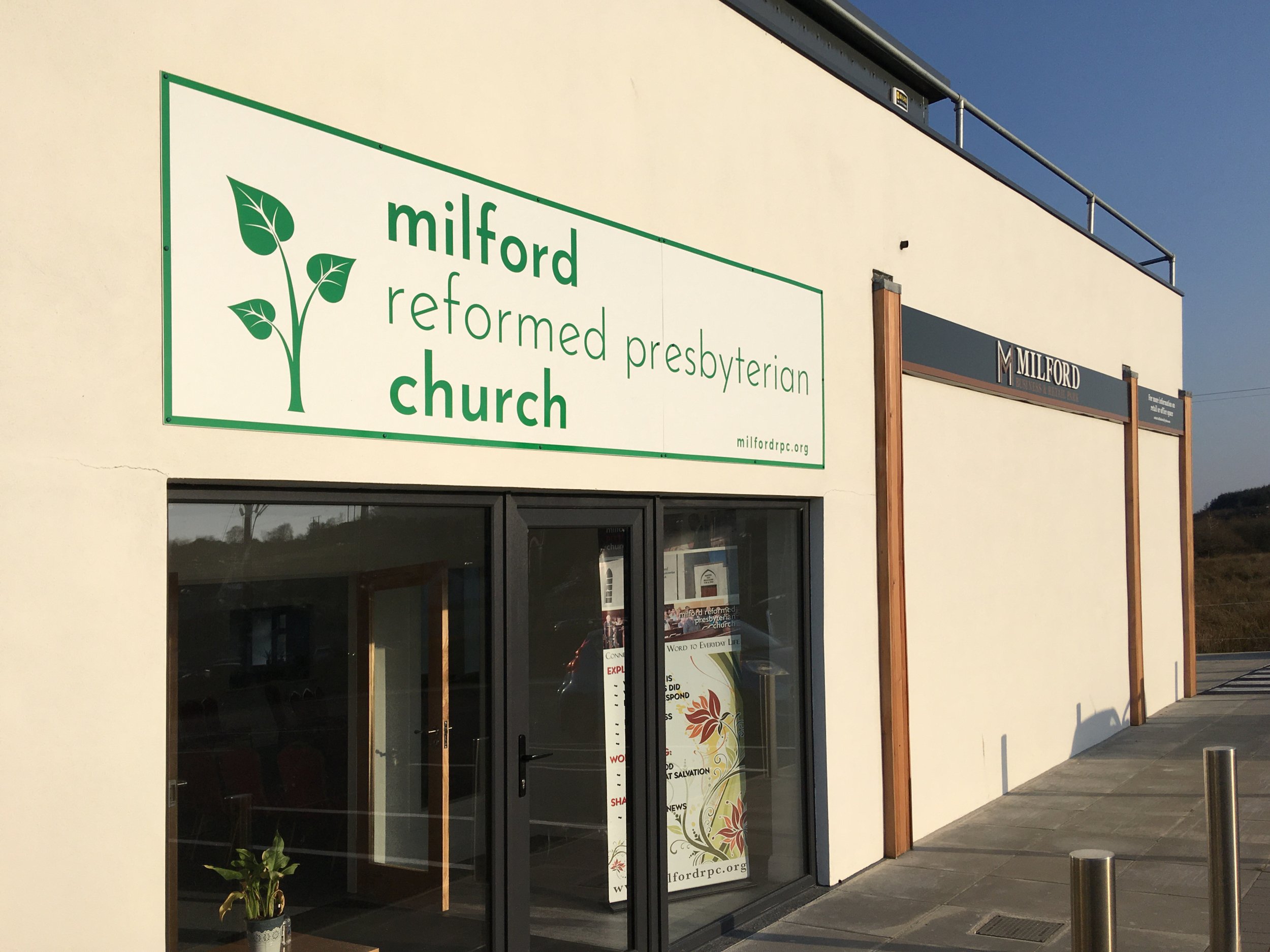
Mark Loughridge is the minister of Milford Reformed Presbyterian Church. He can be contacted on 074 9123961 or Mark@Milfordrpc.org
But her life has been turned upside-down. She’s pregnant. It’s the 1st century, and a deeply religious culture. There’ll be the shame of being pregnant before marriage and then the scorn poured on her when she explains, “It isn’t Joseph’s, this child came from God.” You can almost hear the laughter, the name-calling, the pained look in Joseph’s eyes. In human practical terms, Mary’s life had taken a severe downwards plunge. She could be stoned to death for adultery. At the very least she would be a social outcast forever.
Yet what do we see from this young girl? She sings—not an anguished lament for a lost childhood, but a song of praise. Surprisingly her song is not about her problems—it’s all about God, full of love and praise to God. Instead of turmoil, we see a song that reveals the spiritual strength of this amazing young girl.
The opening lines from her song are December’s verse on the 2009 calendar. The opening lines are startling, “My soul glorifies the Lord and my spirit rejoices in God my Saviour.” (Luke 1:46)
Two things stand out here:
Firstly, although her life has been turned upside-down, Mary is thrilled. Why is that? She has grasped that the promised Rescuer, whose arrival has been waited on since the time of Adam & Eve, has come. At last he has arrived. The one to whom all the sacrifices, kings, prophets, rescuers—indeed the whole Old Testament—had pointed. The answer to the great problem of man’s guilt has arrived. Any wonder Mary is thrilled!
But the second thing we see is this: Mary, the one woman chosen out of millions, the extraordinary blessed one, acknowledges that she needs God to rescue her, to be her saviour. She knows that guilty people cannot stand in the presence of a holy God. But she also knows that there is hope, that God will rescue her and she has evidently asked him to do that for her—for she calls him “My Saviour”.
And if this wonderfully privileged girl needs a Saviour so do we. That’s what Christmas is about—the coming into the world of the Saviour—one who’ll rescue us if we ask him. Mary tells us that we all need a Saviour.
In Other News!
I want to give a mention to the Milford Inn’s Christmas Appeal this year. It’s about supplying presents to those children in our own community whose families are finding things tough. If you’re able to help out, drop in to the hotel and ask for Joanne. Well done to Joanne, Audrey and Caroline and all the staff at the hotel.
Mark Loughridge is the minister of Milford Reformed Presbyterian Church. He can be contacted on 074 9123961 or Mark@Milfordrpc.org
That man Thierry Henry again
24/11/09 15:51 Filed in: Musings
What are your ambitions?
I remember that question being asked in English class
at school. What nonsense we wrote—one of mine was
swimming the English Channel. I suspect we weren’t
writing our ambitions, but seeking to impress the
teacher.
The ambitions of children differ somewhat from those of adults. But perhaps only in terms of realism. Our ambitions become a little more in tune with our abilities (unless of course you’re on X-Factor).
Ambition is fine, but it has a nasty habit of springing surprises on us. Consider the now infamous Thierry Henry, footballing superstar, and now possibly seeking to switch to Gaelic football, except that he wouldn’t be welcome in Ireland. His ambition to get France to the World Cup finals took a nasty turn for the worse.
Ambition has a habit of narrowing us as individuals. We see our goal and only our goal. Other things that stand in the way become secondary—in Henry’s case, the rules of the game, sportsmanship, integrity, reputation etc. The result becomes all that matters. And it’s true not only for him, but also for us in all sorts of different ways. Consider the pursuit of something ordinary—a quiet evening in. Your aim is peace and relaxation, but your children aren’t aware of that! And in pursuit of your goal, you turn into a screaming threatening monster, resentment and fear is bred, and relationship damaged. Our ambition has blinkered us.
Ambition also has a habit of disappointing us; we get what we aim for, only to find out that it isn’t as fulfilling as we thought. Or we achieve success, only to be eclipsed by others.
Ambition brings fear and anxiety too—what if my goal doesn’t materialise? What if I get it and something threatens it?
Am I saying that we should all be spineless, ambitionless couch potatoes? Certainly not. But there has to be a way of having ambitions that doesn’t narrow us, disappoint us, or threaten us.
The answer is found in Philippians 3:10-11where the apostle Paul sets out his ambition in three strands. He wants to know Christ, he wants to be like Christ, and he wants to be with Christ.
Here is the greatest ambition anyone can have—to know and relate to the infinite God who created the universe, forever. Here is ultimate success. Here is ambition that lasts. Here is an ambition that will never disappoint, be taken from us, threaten us, or narrow us.
Instead, when we get this one right, then all our other ambitions fall into place, and we can enjoy the pursuit of them, whether we get them or not—because our happiness, security, identity isn’t bound up in them, but in who we are before God.
What is your ambition? And where will it take you?
The ambitions of children differ somewhat from those of adults. But perhaps only in terms of realism. Our ambitions become a little more in tune with our abilities (unless of course you’re on X-Factor).
Ambition is fine, but it has a nasty habit of springing surprises on us. Consider the now infamous Thierry Henry, footballing superstar, and now possibly seeking to switch to Gaelic football, except that he wouldn’t be welcome in Ireland. His ambition to get France to the World Cup finals took a nasty turn for the worse.
Ambition has a habit of narrowing us as individuals. We see our goal and only our goal. Other things that stand in the way become secondary—in Henry’s case, the rules of the game, sportsmanship, integrity, reputation etc. The result becomes all that matters. And it’s true not only for him, but also for us in all sorts of different ways. Consider the pursuit of something ordinary—a quiet evening in. Your aim is peace and relaxation, but your children aren’t aware of that! And in pursuit of your goal, you turn into a screaming threatening monster, resentment and fear is bred, and relationship damaged. Our ambition has blinkered us.
Ambition also has a habit of disappointing us; we get what we aim for, only to find out that it isn’t as fulfilling as we thought. Or we achieve success, only to be eclipsed by others.
Ambition brings fear and anxiety too—what if my goal doesn’t materialise? What if I get it and something threatens it?
Am I saying that we should all be spineless, ambitionless couch potatoes? Certainly not. But there has to be a way of having ambitions that doesn’t narrow us, disappoint us, or threaten us.
The answer is found in Philippians 3:10-11where the apostle Paul sets out his ambition in three strands. He wants to know Christ, he wants to be like Christ, and he wants to be with Christ.
Here is the greatest ambition anyone can have—to know and relate to the infinite God who created the universe, forever. Here is ultimate success. Here is ambition that lasts. Here is an ambition that will never disappoint, be taken from us, threaten us, or narrow us.
Instead, when we get this one right, then all our other ambitions fall into place, and we can enjoy the pursuit of them, whether we get them or not—because our happiness, security, identity isn’t bound up in them, but in who we are before God.
What is your ambition? And where will it take you?
Context, Context, Context
17/11/09 15:50 Filed in: Factual
One of the questions I
get asked from time to time is, “Do you take the Bible
literally?” It really depends on what the person means.
If they mean “Do you believe every word of the Bible?’
then the answer is “Yes”. If they mean do you take
every word to mean what it literally says, the answer
is “No”.
What’s the difference, I hear you ask. Am I just splitting hairs or playing word games? Consider this from Psalm 98, “Let the rivers clap their hands, Let the mountains sing together for joy”. Do I take it literally—and expect Mount Errigal to break forth in a beautiful tenor voice? Or do I understand that the style of writing here is poetry, and understand this poetically? Different genres (styles of writing) have different rules, and when we read the Bible we need to be aware of them.
We don’t read history the same way we read instruction. Just because something is recorded in the Bible doesn’t mean that God approves. It is, after all, a record of his dealings with sinful people—so we should expect to see an honest record of the sort of messed up people he deals with.
But we do read history as history—this isn’t a back door method to explain away creation, miracles or the resurrection.
We need to read the Bible in context. And this applies, not just to styles of writing, but to individual verses as well. This answers one of the old chestnuts that gets thrown about—that the Bible can be used to prove anything. True, but so could your words, if someone was ungracious enough to take them out of context.
This is one of the most important rules in reading the Bible. When we come to read a verse, we need to read the surrounding verses to see what it is getting at. The Bible isn’t a collection of random sayings stitched together any old way. It is made up of sentences and paragraphs that connect. For example, one of the most misused verses is: “Do not judge, or you too will be judged” (Matt 7:1).
It is brought up when anyone dares to point the finger at something wrong. But even a casual glance at the context shows that Jesus isn’t speaking about judging per se, but hypocrisy. He goes on to say, “Why do you look at the speck of sawdust in your brother's eye and pay no attention to the plank in your own eye? … You hypocrite, first take the plank out of your own eye, and then you will see clearly to remove the speck from your brother's eye.”
Jesus doesn’t say, “How dare you point out that speck”, he says, “Point it out, but make sure you don’t have one yourself first”.
And in the wider context, a few verses later Jesus tells us to judge a tree (meaning a person) by its fruits. Judging itself isn’t wrong, but double standards are.
Understanding this simple rule of context will help us understand much of what the Bible is saying.
What’s the difference, I hear you ask. Am I just splitting hairs or playing word games? Consider this from Psalm 98, “Let the rivers clap their hands, Let the mountains sing together for joy”. Do I take it literally—and expect Mount Errigal to break forth in a beautiful tenor voice? Or do I understand that the style of writing here is poetry, and understand this poetically? Different genres (styles of writing) have different rules, and when we read the Bible we need to be aware of them.
We don’t read history the same way we read instruction. Just because something is recorded in the Bible doesn’t mean that God approves. It is, after all, a record of his dealings with sinful people—so we should expect to see an honest record of the sort of messed up people he deals with.
But we do read history as history—this isn’t a back door method to explain away creation, miracles or the resurrection.
We need to read the Bible in context. And this applies, not just to styles of writing, but to individual verses as well. This answers one of the old chestnuts that gets thrown about—that the Bible can be used to prove anything. True, but so could your words, if someone was ungracious enough to take them out of context.
This is one of the most important rules in reading the Bible. When we come to read a verse, we need to read the surrounding verses to see what it is getting at. The Bible isn’t a collection of random sayings stitched together any old way. It is made up of sentences and paragraphs that connect. For example, one of the most misused verses is: “Do not judge, or you too will be judged” (Matt 7:1).
It is brought up when anyone dares to point the finger at something wrong. But even a casual glance at the context shows that Jesus isn’t speaking about judging per se, but hypocrisy. He goes on to say, “Why do you look at the speck of sawdust in your brother's eye and pay no attention to the plank in your own eye? … You hypocrite, first take the plank out of your own eye, and then you will see clearly to remove the speck from your brother's eye.”
Jesus doesn’t say, “How dare you point out that speck”, he says, “Point it out, but make sure you don’t have one yourself first”.
And in the wider context, a few verses later Jesus tells us to judge a tree (meaning a person) by its fruits. Judging itself isn’t wrong, but double standards are.
Understanding this simple rule of context will help us understand much of what the Bible is saying.