Those disarmingly honest words came from the mouth of the clinical psychologist Dr Tony Bates in conversation with Tommy Tiernan. Bates, founder of Jigsaw, has spent years working with young people facing mental health challenges. His comment might sound stark at first—but I found it refreshingly real.
I wonder how you reacted to it. Did it feel like an exaggeration? Surely we’re not all a mess?
And yet, if we’re honest, there’s something in it. Too often we try to convince ourselves—and each other—that everything is grand. We keep things at the surface level, avoiding what’s really going on underneath. But pretending doesn’t make things better. In many ways, it only deepens the struggle.
Acknowledging that something isn’t right is not a sign of weakness; it’s often the beginning of something healthier. That doesn’t mean telling everyone everything. But it does mean having spaces where we can be honest about where we’re struggling and where we need help.
Bates has spoken about the kind of society he would like to see—one marked by greater compassion and patience. If we recognised that everyone is carrying something, we might be slower to judge and quicker to show kindness. Admitting that we’re not as together as we appear could, perhaps, make us more gentle with one another. As Bates suggests, it’s through that honesty that real growth and change can begin.
For Christians, this isn’t a new idea. One of the first people to admit that he had a problem was the apostle Paul. He expressed it in even stronger terms: “Wretched man that I am!” (Romans 7:24). He recognised that the problem runs deeper than we often like to admit—not just in our circumstances, but within ourselves.
The Bible describes this as a problem of the heart: a tendency to resist God’s way and go our own. It’s not something we can easily fix by ourselves, no matter how hard we try.
Yet the Christian message doesn’t stop at diagnosis. It speaks of a God who is patient and deeply loving—one who does not stand at a distance from our mess, but steps into it. In Jesus Christ, God has entered into our brokenness in order to lift us out of it.
After asking, “Who will deliver me from this body of death?”, Paul answers his own question with profound gratitude: “Thanks be to God through Jesus Christ our Lord!”
That hope still speaks today. It means that we don’t have to have everything sorted before seeking help, or before coming to church. In fact, the opposite is true. Church is not a gathering of people who have it all together, but a community of those who know they don’t—people who are learning, slowly, what it means to be changed.
If Bates is right—if we are all a mess at some level—then perhaps honesty is the best place to begin. Honesty with ourselves that helps us see our need of Jesus and leads to a deeper compassion for others.
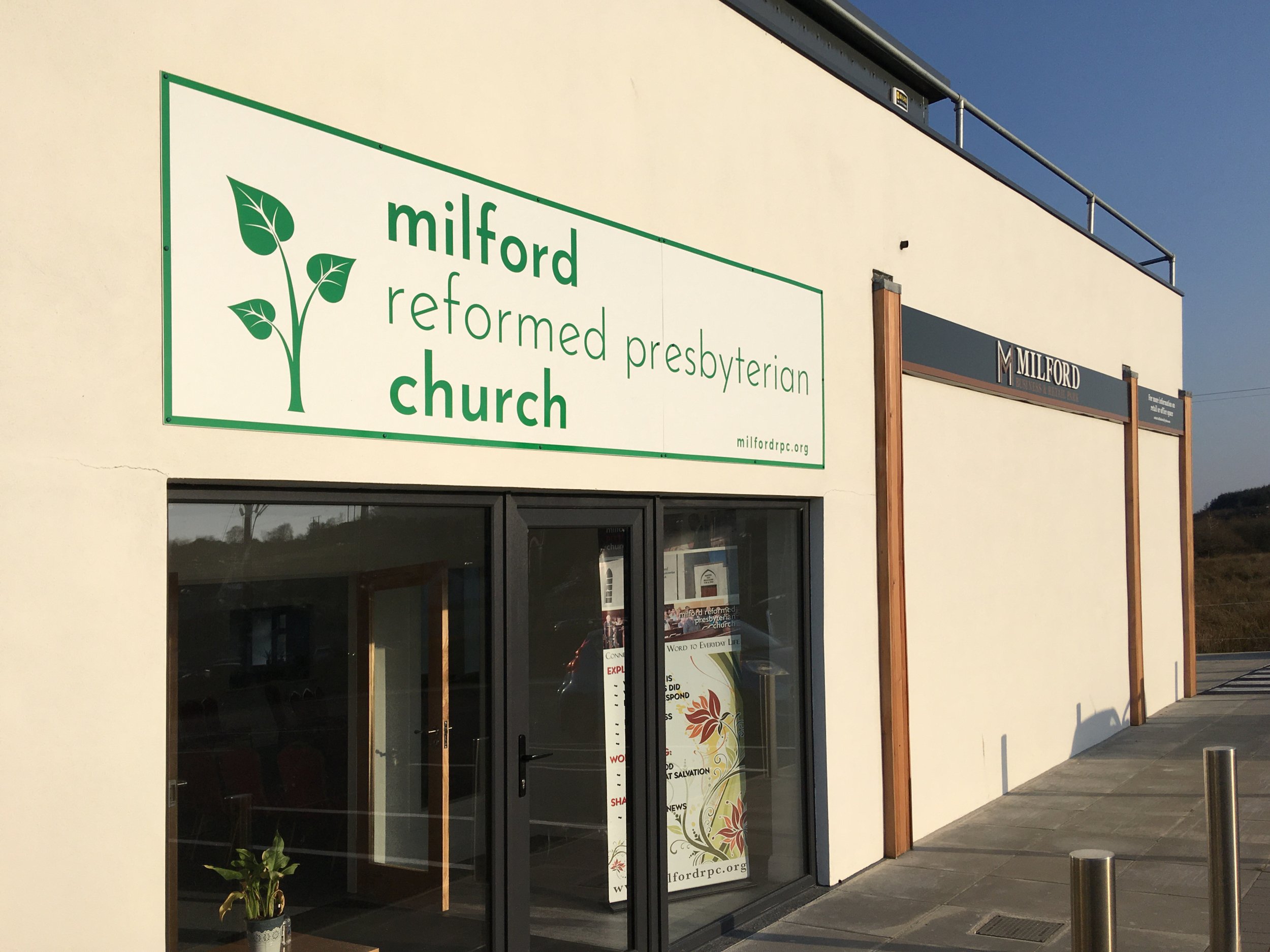
Nick Jones is one of the ministers in Milford Reformed Presbyterian Church. He can be contacted on 085 8889625 or nickjones2011@gmail.com You can listen to their sermons on Spotify, search for Milford RPC.


Leave a Reply